
Setup and Change Default Stream Settings
Updated
Our Stream Stepper is a guided, step-by-step setup that adjusts to the choices you make. Default stream settings are configured through the Stream Stepper and automatically apply to newly created events. You can still override these defaults for individual events.
What Are Default Stream Settings?
Default stream settings tell Sardius where your stream comes from, where it goes, and which outputs it feeds. Once they're set, every new event on your channel starts with these settings already filled in, so you don't have to set up each event from scratch.
Key points:
-
Defaults apply only to new events created after they're set.
-
Defaults can be changed at any time.
-
You can override defaults for individual events if needed.
Before You Begin
-
Using an encoder? Pair it with your account first. See Add a Device.
-
Sending to Facebook, YouTube, RTMP, or SRT? Create those outputs first so they're available to select. See Adding an Output.
Creating Defaults
1. Enable Streaming for Your Channel
-
Open the Control Panel and navigate to Channels.
-
Select the channel you want to configure.
-
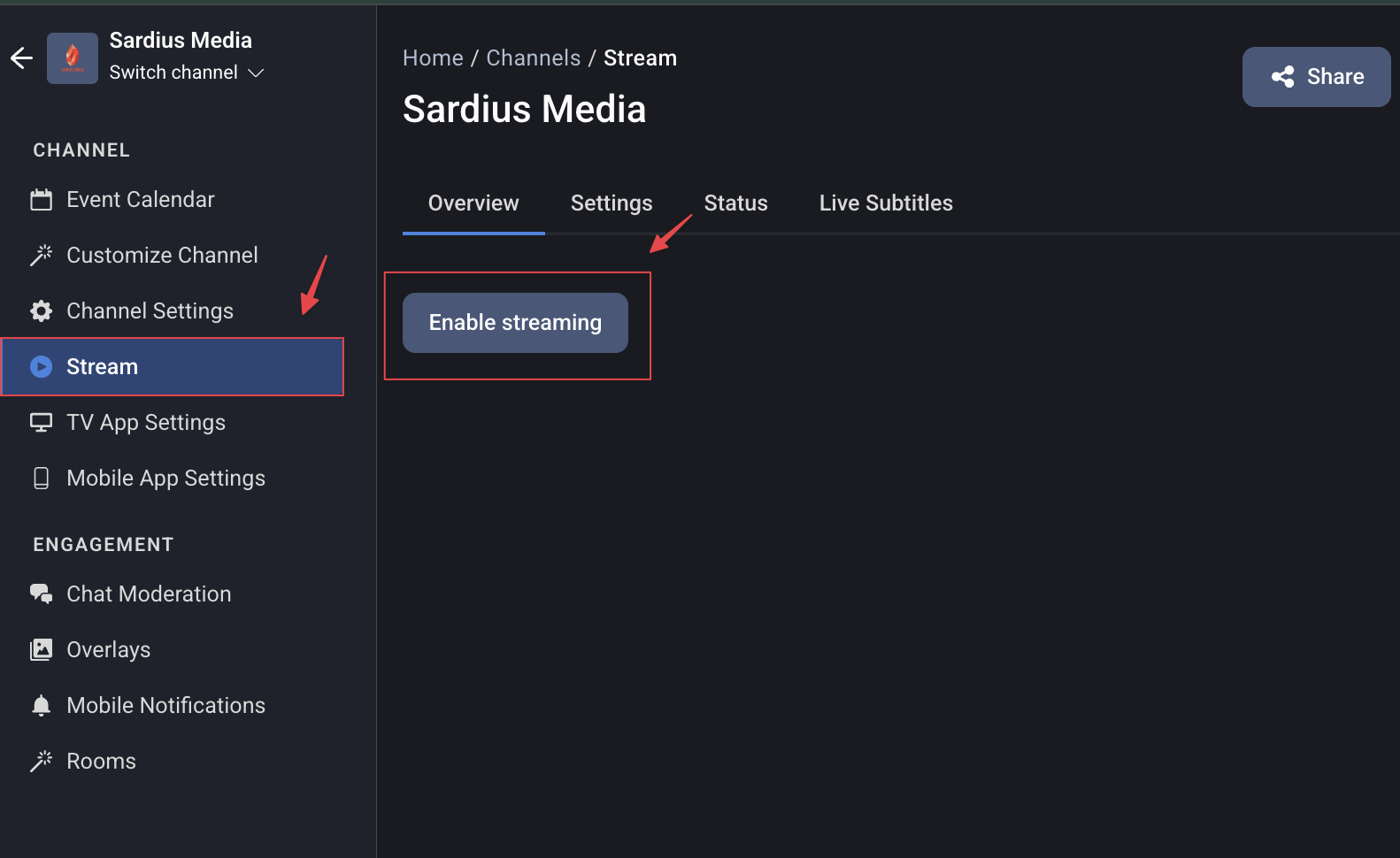
In the sidebar, click Stream.
-
Click Enable streaming.
Once streaming is enabled, you'll be prompted to start defining your default stream settings.
2. Configure Your Default Stream Settings
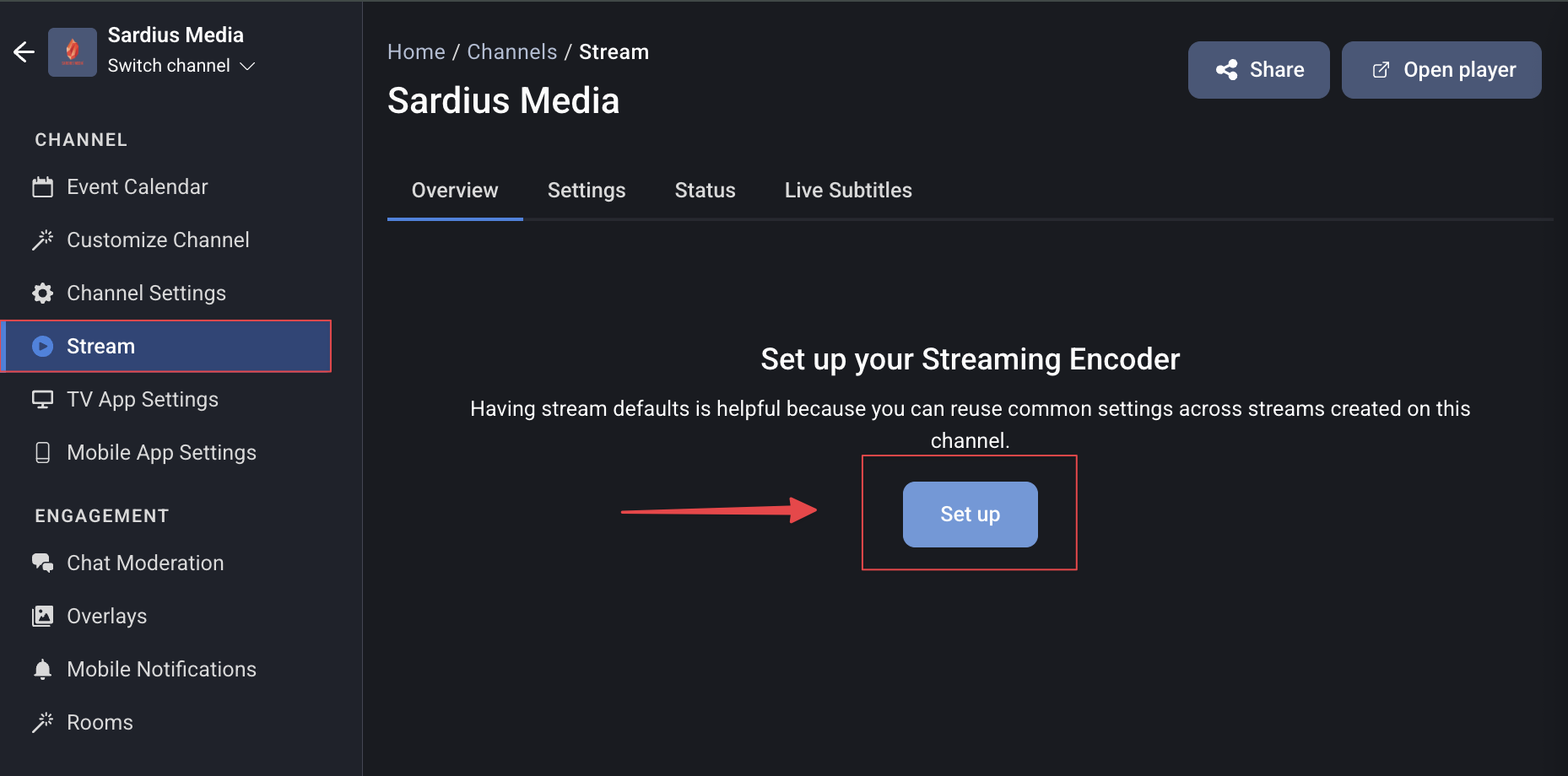
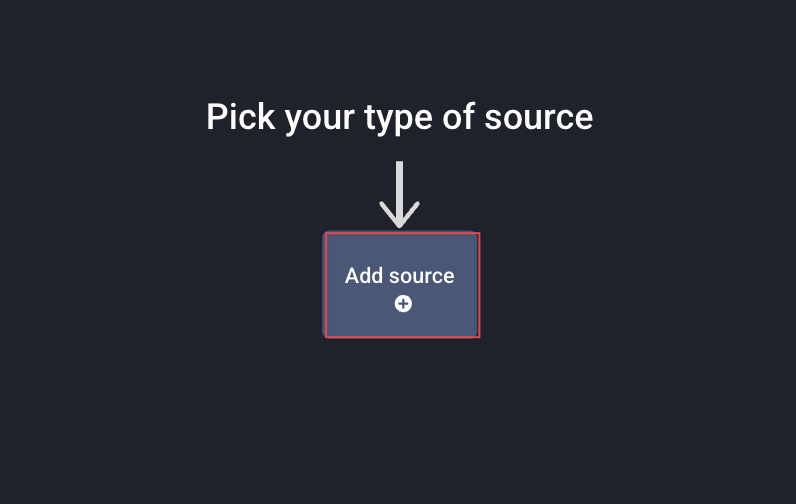
Click Set defaults to open the Stream Stepper, which will guide you through each step.
Step 1: Choose Your Source
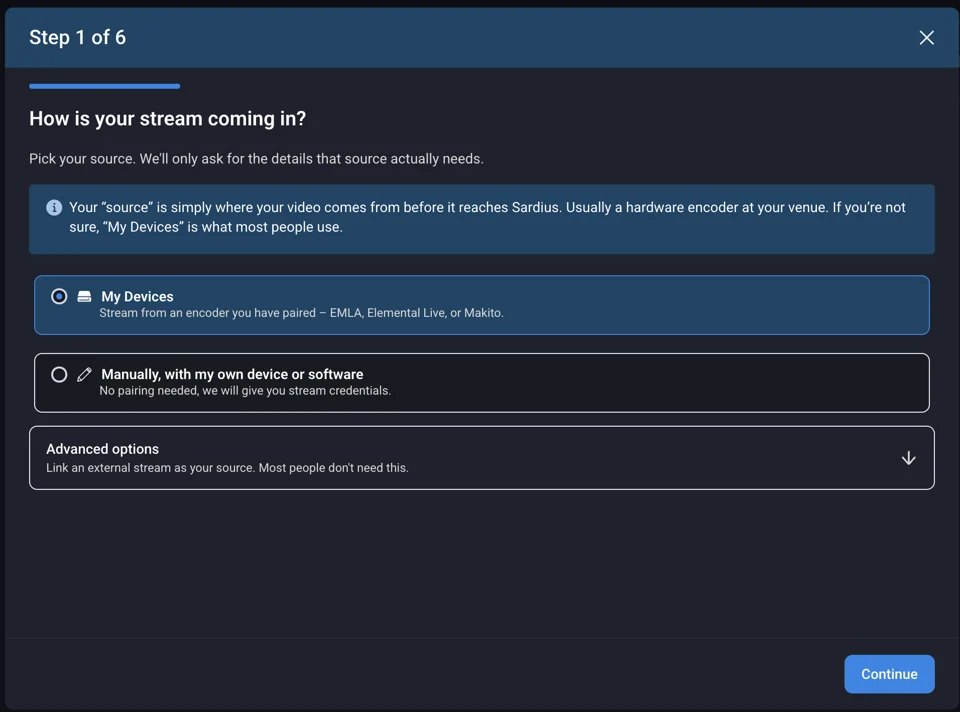
Select how your stream will reach Sardius:
-
My Devices: a hardware encoder you've paired with your account (for example, a Sardius EMLA, Makito, or Elemental). This option walks you through the full setup below.
-
Manually, with my own device or software: any encoder or software (like OBS) that sends to a Stream URL and Stream Key.
-
Linked Asset: a stream from an external provider.
-
Simulated Live: available when editing an event's stream settings.
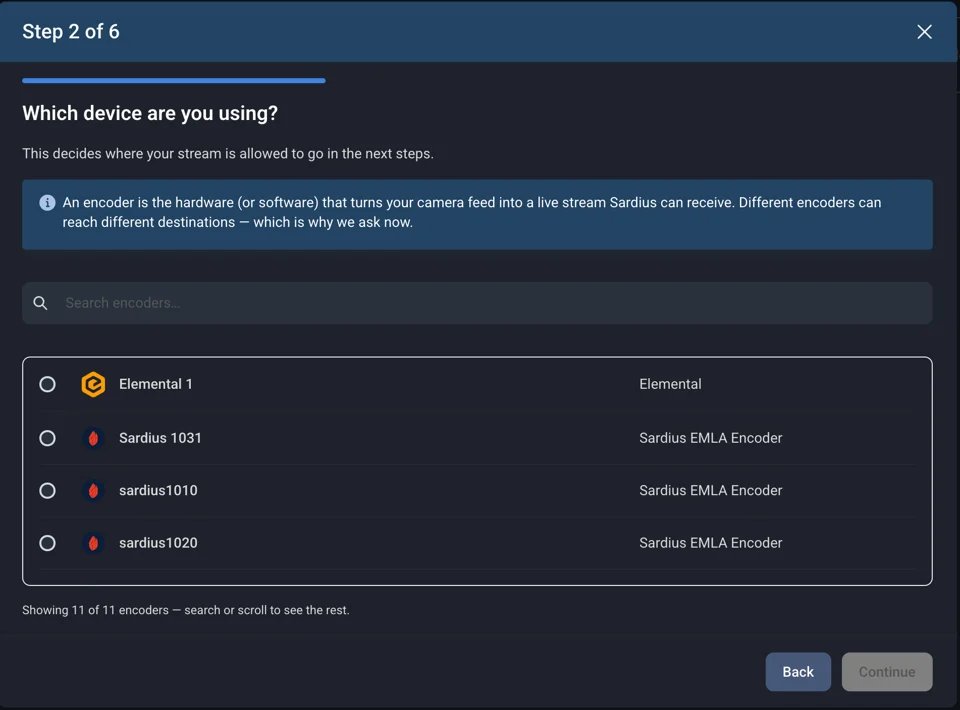
Step 2: Select Your Encoder
Choose the paired encoder you want to use by default. If you have several devices, use the search bar to find it quickly. Then click Continue.
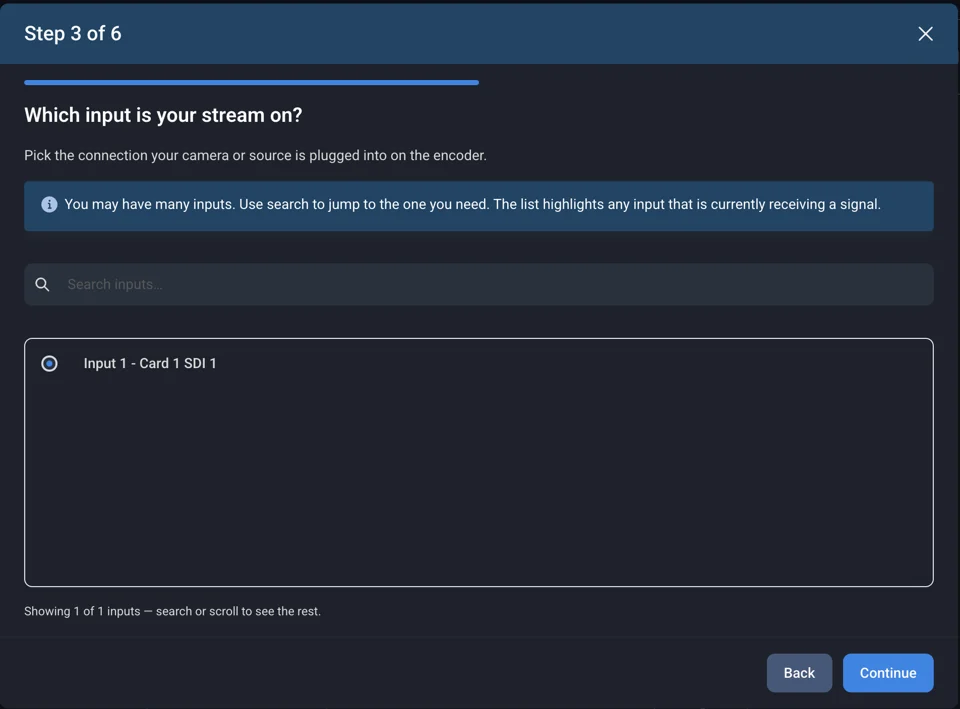
Step 3: Select Your Input
Choose which input on that encoder carries your video (for example, SDI or HDMI), then click Continue. You'll need to make a selection before you can continue.
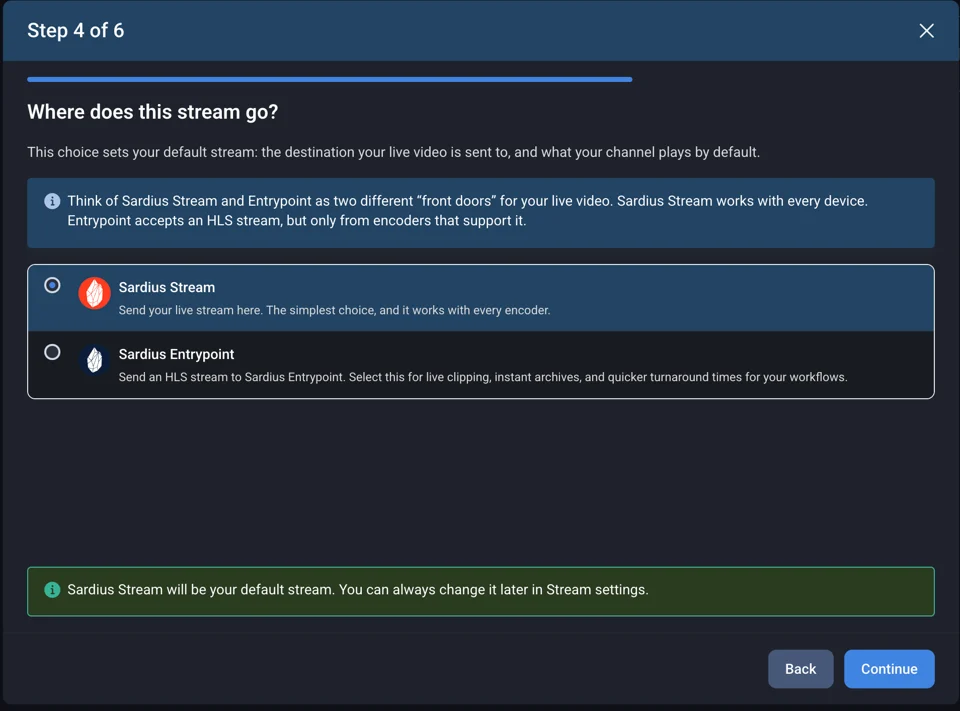
Step 4: Select a Default Stream
Choose how Sardius will receive your live feed:
-
Sardius Stream: Sardius manages your stream and can send it to multiple outputs.
-
Sardius Entrypoint: sends your stream to Sardius over HLS, with support for custom bitrates, resolutions, and multiple audio languages.
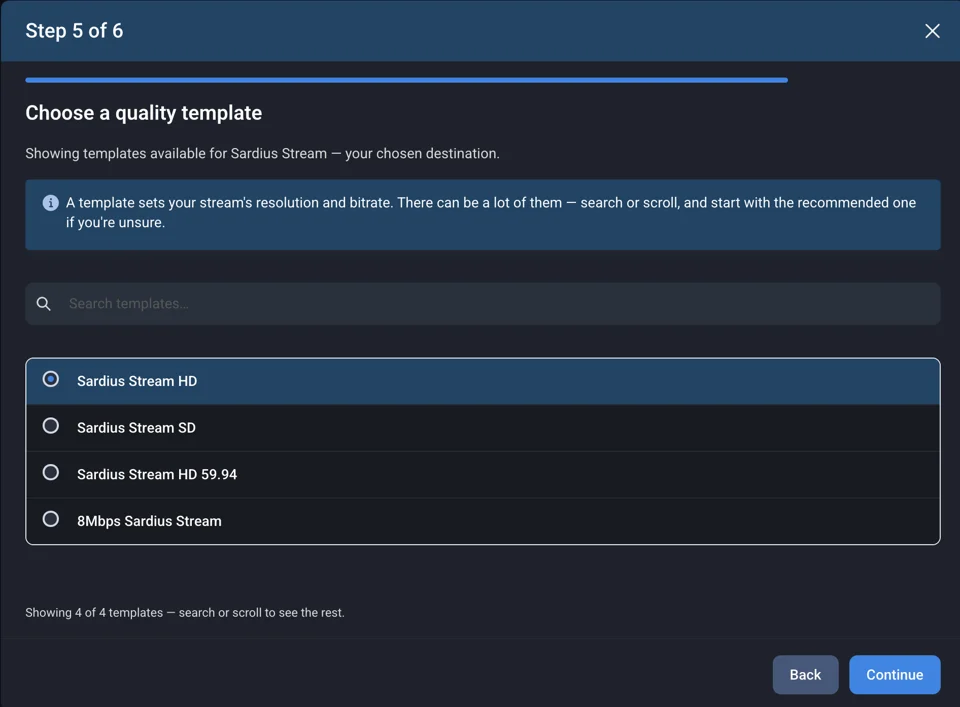
Step 5: Select a Template
A template controls your stream's quality settings, like resolution and bitrate.
-
You'll only see templates that work with both your encoder and the default stream you chose in Step 4. For example, a Makito X4 sending to Sardius Stream only shows Makito X4 Sardius Stream templates.
-
The HD template is selected for you by default. Keep it, or choose the SD template or any custom template you've created.
-
A template is required to continue.
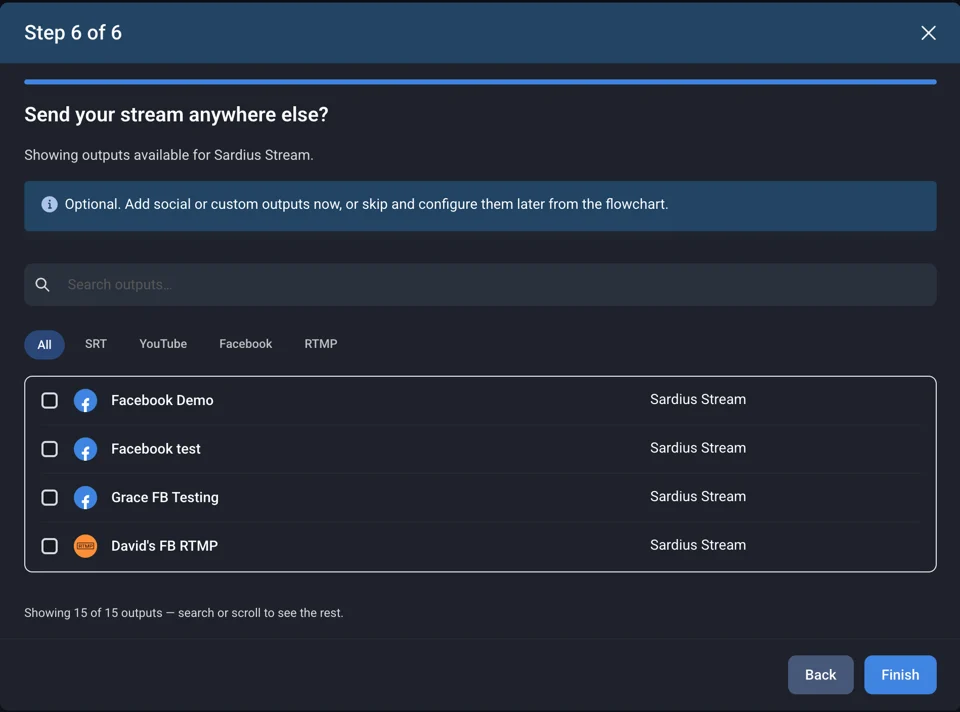
Step 6: Add Outputs (Optional)
Select any outputs that should be included on every new event, such as:
-
SRT connections
-
Facebook
-
YouTube
-
RTMP destinations you've created
You can skip this step and add outputs later.
3. Review and Save
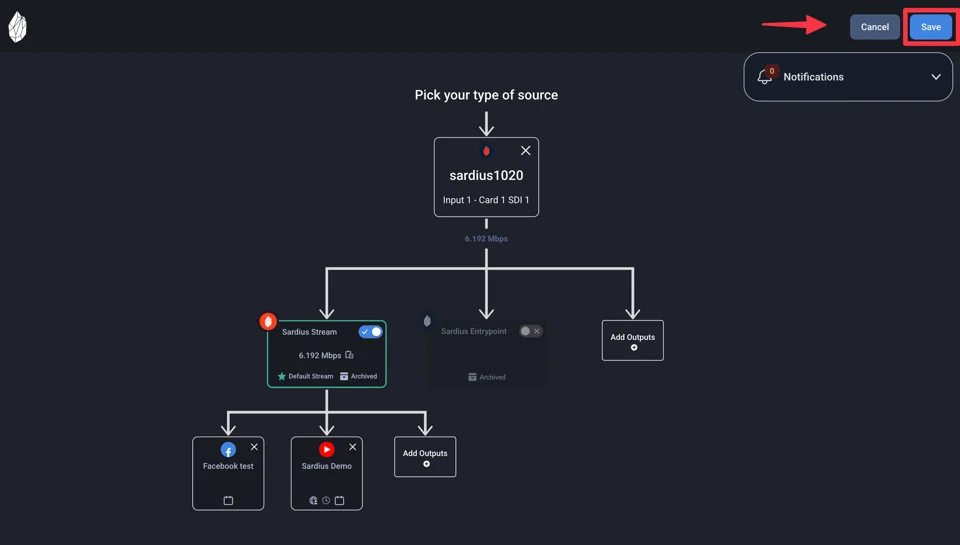
After you click Finish, you'll see your full setup: source, stream, and outputs. You can make any additional changes here, such as adding or editing outputs.
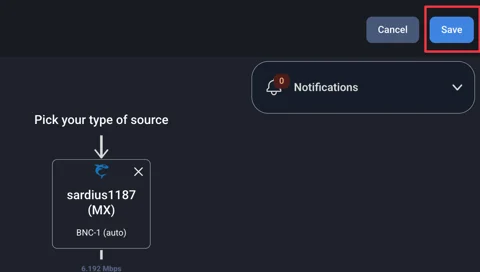
When everything looks right, click Save in the top right corner.
How Defaults Work When Creating Events
When you create a new event:
-
The Stream Stepper automatically fills in the source, encoder, and outputs based on your defaults.
-
You still need to step through the Stream Stepper to confirm or change settings before publishing the event.
Overriding Default Settings for a Specific Event
If an event needs a different encoder or different outputs:
-
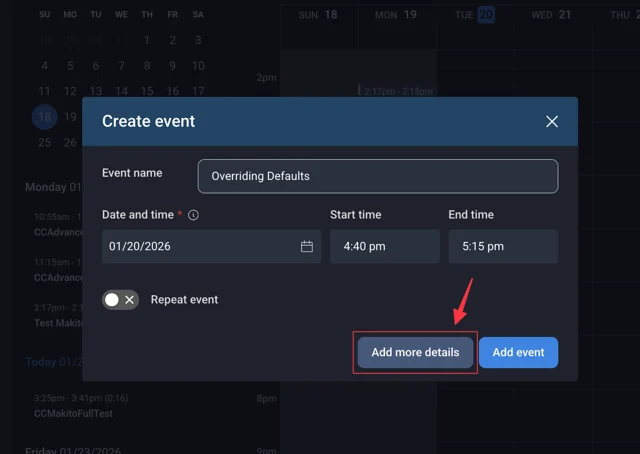
Create or open the event in your calendar and click Add More Details.
-
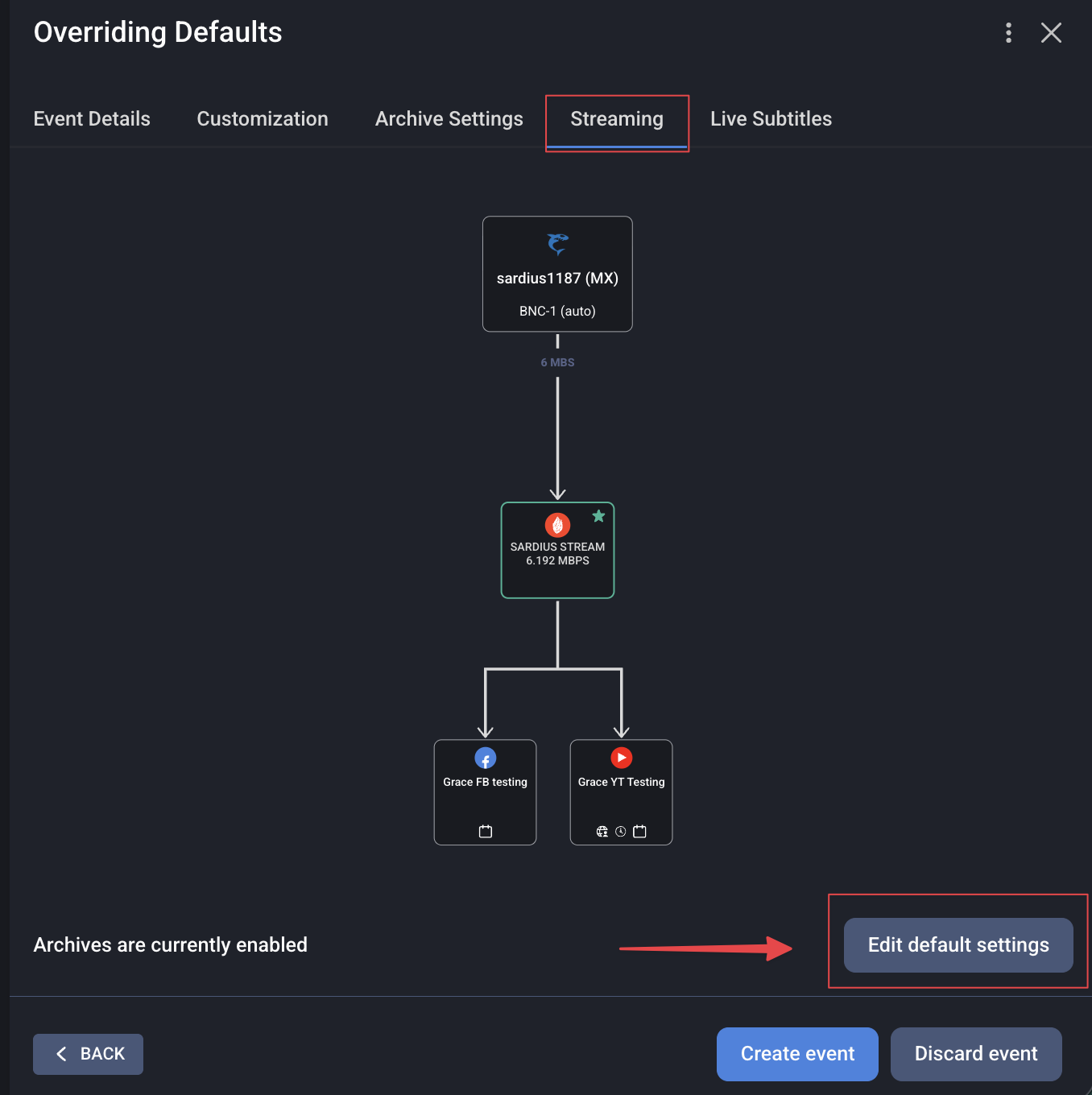
Go to the Streaming Settings section.
-
Select Edit default settings.
-
The Stream Stepper will open with your defaults already filled in.
-
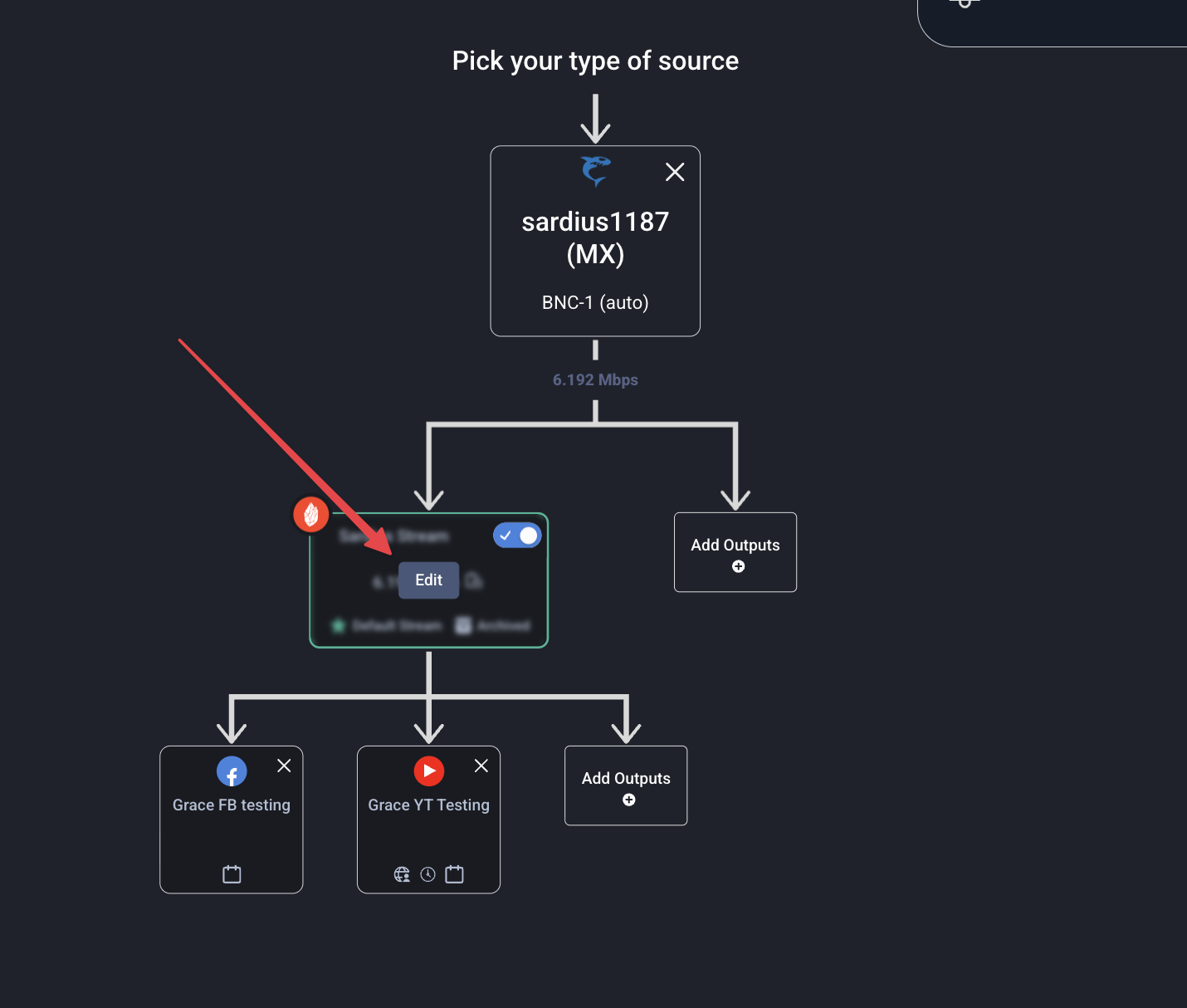
To change a step, hover over it and click Edit.
-
Click Save when you're done.
This gives the event its own settings while leaving your channel's defaults unchanged.
Changing Your Default Settings
-
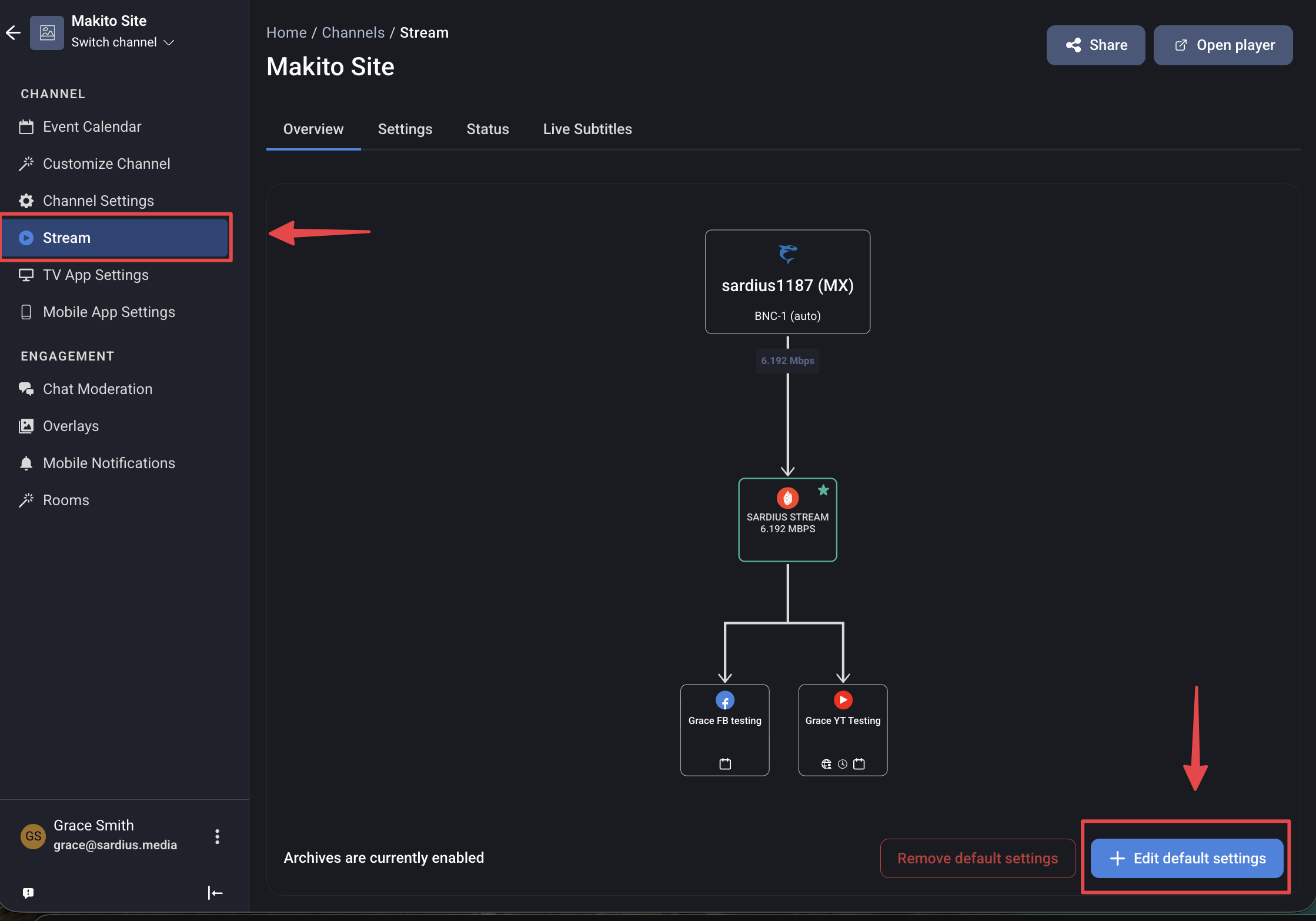
Navigate to your channel's Stream settings.
-
Click Edit default settings (bottom right).
-
The Stream Stepper will open with your current defaults loaded.
-
Hover over the step you want to change, click Edit, then click Save when you're done.
How much of the Stream Stepper you'll see depends on what you change:
-
Switching to a similar encoder, or only changing the input (for example, one EMLA to another): the Stream Stepper closes after the input step. Your default stream, template, and outputs stay the same.
-
Switching to a different type of encoder (for example, EMLA to Makito, or Makito X to Makito X4): you'll go through the Default Stream, Template, and Outputs steps again, since different encoders support different options.
Removing Default Settings
-
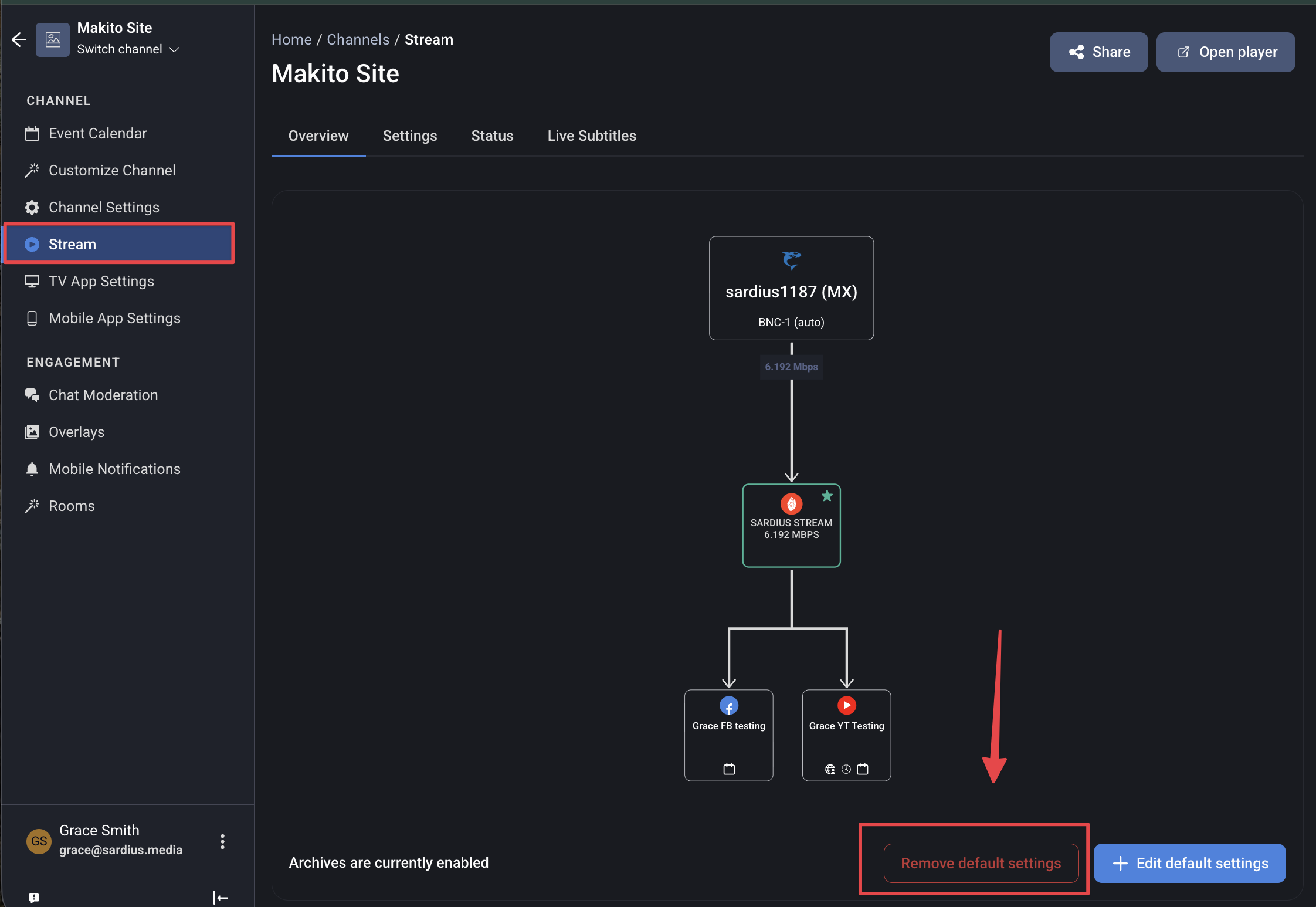
Open your channel's Stream Overview page.
-
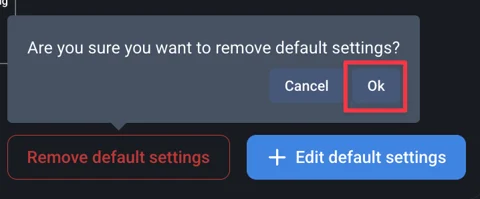
Next to your encoder or manual configuration, click Remove default settings.
-
Confirm by clicking OK.
That's it! Your channel's default stream settings are set up. If you have any questions, contact Sardius Support and we'll be happy to help.